Discover, Learn, Explore with MunroandGlen.com

UK Met Office app now provides detailed mountain forecasts
The Met Office's updated app is great for trekkers and climbers
JW Mitchell
3/24/20263 min read
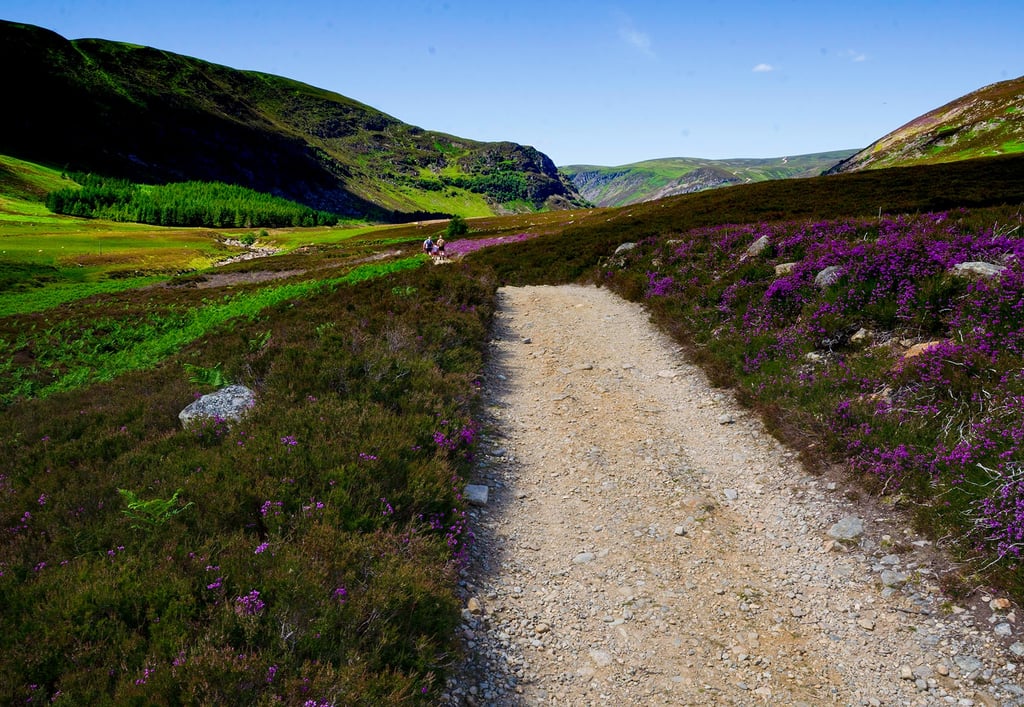
Trekkers heading into Glen Mark in the Cairngorms on a fine sunny day in June, though the weather in the mountains of Scotland can change at the drop of a hat. The UK Met Office has now updated it's app with a very thorough Mountain Weather Forecast - Picture by Geopix/Avalon/Bill Mitchell
As many trekkers will know, weather conditions in the Scottish Highlands are notoriously fickle. Quite a few trekkers and climbers get caught out when up on the peaks of the Cairngorms, Grampians and various other parts of the Highlands - even in the summer months.
The UK Met Office has now updated it's app (Apple iOS and Android, plus on their web site) and now has a very detailed Mountain Weather Forecast for four regions of Scotland: the Northwest Highlands, North Grampian, South Grampian and Southeast Highlands and the Southwest Highlands. Other mountainous areas of the British Isles are also included.
In each of the four forecasts is a useful estimate of what the Met Office call 'Mountain Weather Hazards' - all rated Low, Medium or High Likelyhood, which is very useful when doing a quick risk assessment of your trip into the mountains.
"Mountains can be inhospitable and dangerous places for the ill-prepared. From one hour to the next, from one hill to the next, they can exhibit a dramatic variation in weather conditions. Whether it's a well-planned expedition or a spur of the moment decision to go to the hills, it is important to check the forecast," the Met Office says.
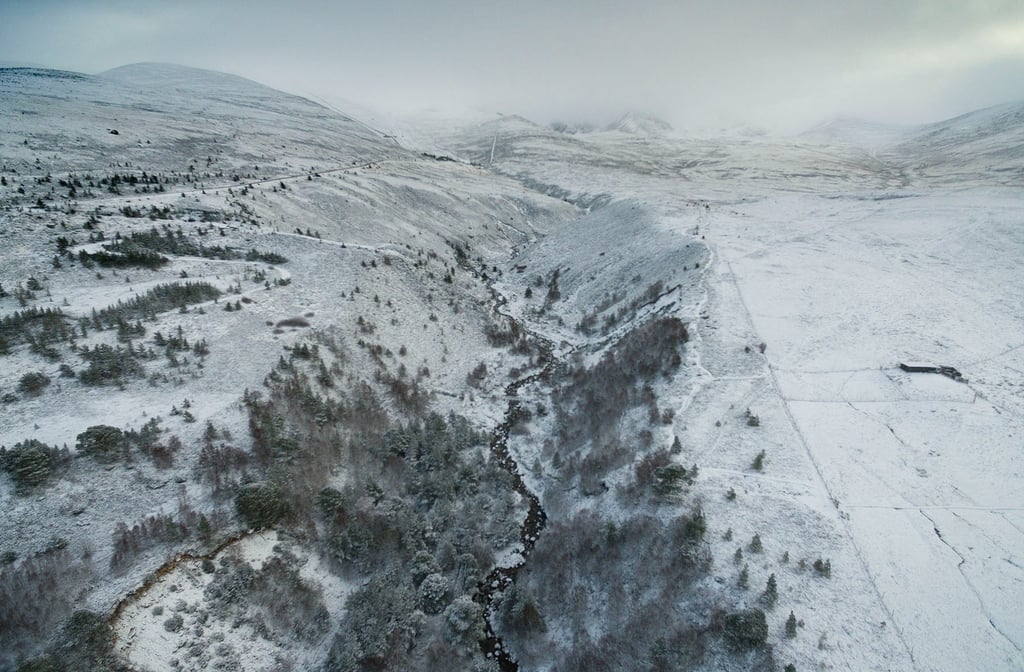
Brrrrr...After the treeline in the mountains of the Scottish Highlands one enters a sub-Arctic climate zone and even in the summer months, the weather at the top of the Munros and Corbetts can be very cold. Pictured here are the peaks around Cairn Gorm in the Cairngorms National Park on a cold January winter day - Photo: Jonathan Mitchell/Altitude
Mountain Weather Hazards apply over altitudes of 300m - which the Met Office says, reflects the more severe conditions above that altitude. These hazards caused by weather conditions vary. It is not just getting caught up in a blizzard or rain storm. Winds can knock you off your feet (it happened to me once on the slopes of Cairn Gorm and I was forced to cancel the trek), fog and blizzard white-outs can effectively leave you blind as to your surroundings (hence you may not see a cliff edge, etc). As the old explorer's rule says, death can come after three weeks without food, three days without water and just three hours from exposure.
It is therefore, wise to pack clothing for the worst weather imaginable. I once ascended Ben y Vrackie in July and at the summit had most of Arctic kit on. A compass and map are also very useful (as opposed to a smartphone map, which may drain down in cold conditions) and learning Orienteering (I learnt in the Scouts as a boy and once in just 1 metre of visibility in the Everest Himalaya, orienteered to Ama Dablam Base Camp! It is quite easy to learn from a YouTube Video), ensured you have decent footware, gloves, windproof and waterproof clothing, plus water and some emergency rations.
The UK Met Office web site offers a great advice page for trekkers and mountaineers on Mountain Safety, which is well-worth a read, whatever your experience level and if heading up into the mountains of the Scottish Highlands in colder months, be sure to check the Scottish Avalanche Information Service (SAIS) web site for any potential risk in the area you plan to visit.