Discover, Learn, Explore with MunroandGlen.com

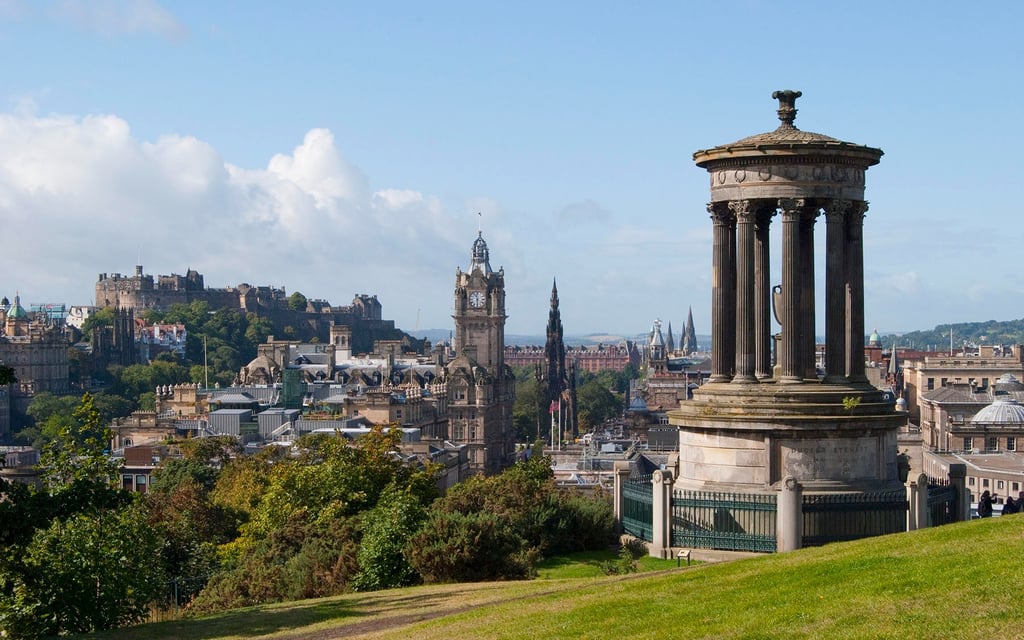
The wonderful panorama overlooking the Old Town and New Town from Calton Hill in the centre of Edinburgh, Scotland. In the foreground is the Stewart Monument designed by William Henry Playfair (the architect who designed much of the New Town) - Photo: Jonathan Mitchell
If cities were horses, then Edinburgh would surely be a thoroughbred. Nicknamed 'The Athens of the North' Edinburgh never ceases to impress. It even has a mountain in the middle of it! Packed full of amazing historical buildings, Scotland's capital offers a lot to visitors from botanical gardens to museums, some great art galleries and museums, a royal palace and a castle. Add in many great restaurants, bars, cafes, shops and lovely public spaces and the result is an almost perfect travel destination.
Most of the places interesting to the tourist are located in the two main downtown areas of the New Town and the Old Town. Though not everything, over in Leith is the former Royal Yacht Britannia and on the outskirts of the city is Edinburgh Zoo and the beaches at Portobello.
The Royal Mile is where many travellers gravitate to, which runs from Holyrood Palace up to Edinburgh Castle and is the heart of the Old Town - in which every street, vennel (alleyway) and lane is steeped in history, some of it quite gory. Aside from interesting walking tours around both the Old Town and New Town, Edinburgh offers many other great things to see and do - with much of it either inexpensive or free.
It is easy to pack in several days of sightseeing in Edinburgh and this is better than just visiting for a day or two - if one can afford it - and if there is availability of accommodation, which can be a problem during the Six Nations rugby tournament, the height of the tourist season in the summer, Hogmanay and of course, during the Edinburgh festivals in August. Edinburgh has very good public transport, so if one visits during the busy periods and can't find a bed, then it is easy to stay outside of the city and travel in for day visits. So it is a good idea to consider all this when making travel plans to visit Scotland.
Old Town
Dominated by the Royal Mile, Edinburgh's Old Town is steeped in history as intricate as the maze of closes (alleyways) and wynds (narrow lanes), stairs and vaults which characterise the area. The Old Town stretches from Waverley station over a ridge which is capped by Edinburgh Castle and slopes down to Holyrood to the lower end and extends down into Grassmarket. This is the ancient city of Edinburgh, which grew around Castle Rock (the hill upon Edinburgh Castle is located). In the 7th century, Castle Rock was called Dun Eiden - which means 'Fort on the Hill Slope'. After being conquered by the Kingdom of Northumbria in 638, the English victors added the Old English word for fort - burgh - to the Gaelic Eiden and hence the name - Edinburgh.
Largely defined by the city walls built in the 1450s, the Old Town was an over-populated, bustling and quite unsanitary city for many centuries until the latter part of the 18th century when the New Town was built. This resulted in buildings with up to 11 floors and this made Edinburgh the home of the first 'skyscrapers'. Unusually for the United Kingdom, until the development of the New Town, all social classes would live side by side, with wealthier people living a few stories up and the poor in cellars and attics. A lot of these buildings have disappeared and much of what one sees in the Old Town these days is from the Victorian era, though some examples still exist.
So it's worth exploring the closes off the Royal Mile, some of which offer unexpected vistas over the city and it is pleasant to wander down Victoria Street to the Grassmarket square and - weather permitting - enjoy a drink on the outdoor terraces. There are a few well-known pubs and several restaurants, one is The Beehive and the other is The Last Drop - which is ironically named due to the fact that Grassmarket was where people were hanged. An undeniable feature of the Old Town is that one is never far from the macabre.